LA's Wildfire Disaster, Zuck Flips on Free Speech, Why Trump Wants Greenland
2025-01-11 spoken.md · speaker-labeled ▶ watch ← E209 all episodes E211 →
Every number here is replayed from score_events — the same ledger the pool ranks on. Decay is what the 133 ideas nobody mentioned gave up this week; it applies only when an episode is processed.
Tier crossings
conviction thresholds crossed by this episode — 65 / 45 / 15 · ideas born here show where they landed. why 65 isn't always green
Kill dates that landed since E209
3 hit · 5 partial · 5 miss —
windows that closed after 2025-01-04 and up to 2025-01-11, auto-scored against price data and never hand-set.
Processed episodes aren't contiguous during backfill, so this span can be months rather than a week.
verdict ·
R ·
α
+1 more window closed in this span — see the full track record
Who moved the board
each voice's force on conviction this episode — supports and opposes, weighted exactly as the replay applied them · share = % of this episode's movement
What got argued (9 ideas)
ordered by how hard each idea moved · quotes are verbatim from the transcript, timestamps deep-link into the episode
State insurance commissioners hold homeowner rates below what CAT models say the risk is worth, so carriers cancel policies and exit California, leaving the state-run FAIR Plan grossly under-capitalised (~$220M of capital plus ~$5B of reinsurance against ~$6B of Pacific Palisades exposure alone) against the LA wildfire losses. The bill gets eaten by the insurers, the state or the federal taxpayer, and property in fire- and coast-exposed zones has to reprice down because rebuild economics stop penciling once insurance is priced at true risk.
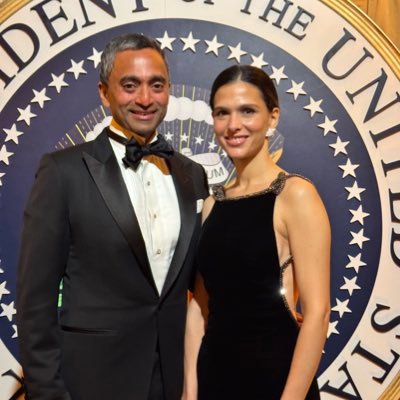
But to the question of who is responsible, it is economically going to make no sense to rebuild unless you can get that insurance. It is a coveted place to live. But because of the construction costs have gone absolutely parabolic in California, because of regulations, you're talking about $14 million in income to build a $7 million house.
And so the free market solution is the only solution. If you look at I have an investment in a company called Kin Insurance, and they specialize in direct to consumer insurance for areas that are plagued with natural disasters... So you're not allowed to use a weather model to price in, you know, your decision making for insurance in this state. And that just doesn't make a lot of sense.

They're driving real estate value up because they're not allowing the cost of insurance of that real estate to naturally float. And so by driving real estate values up, the economy looks good, they make property taxes, income comes in, but at the end of the day, the bill is going to come due. And in the case of Florida and in the case of California, either the state government or the federal government is going to step in and pay the difference.
Chamath's read on Trump's Greenland/Canada talk: as the Arctic ice shelf melts it opens a northern passage for critical goods, making control of that lane a Panama-Canal-class strategic military and economic asset. With China and Russia militarising the Arctic aggressively, the US move is a deliberate bid for chokepoint and resource control — a defense-procurement and critical-minerals theme, not a Trump gaffe.
Because of climate change and other things, the Arctic ice shelf is melting. And the more and more it melts, it opens up a shipping lane in the northern passage for a lot of critical goods. And so if you had some sort of strategic agreement with Canada and Greenland, you effectively have this monopoly control over something that could become as important as the Panama Canal. And so I think if you look across the world, the control of maritime shipping lanes becomes this really critical strategic military and economic asset.
It's very strategic. If you look at the Panama Canal, I believe either end is operated and controlled by China. We are at war with China, whether we like to admit it or not, in my opinion. This is very strategic.
It's not the literal statement that matters as much as kind of the vector and the magnitude of the vector. He's clearly trying to begin negotiating for some change. I don't know what the ultimate kind of strategic endpoint is meant to be here, but clearly there's something I think Chamath might have a good read on this and seems to make a lot of sense.
Killing third-party fact-checkers for community notes, moving trust & safety out of California to Texas and adding Dana White to the board is not a change of heart but the value-maximizing move for Meta shareholders now that the political winds have reversed: it buys cover with the incoming Trump administration and takes breakup/regulatory risk off the table while cutting moderation cost. The live counter-risk is advertisers refusing to sit next to looser content.
I think he's going to have to deal with advertisers next, though. I mean, that's one thing that X doesn't have to deal with as much, and that's going to be the second problem he's going to have is not just the government, but do advertisers want to be next to some of the content that's about to appear.
And when he loses tens of billions of dollars in personal net worth, will he make the same decisions? We'll see. But I can tell you, if Kamala Harris had been voted in, he would double down on censorship instead of taking this position. I think he is terrified of Trump and having his company broken up, and he's doing this strictly to appease Trump, which I think putting Dana White on the board is another signal.
So in this world of AI that we know it today, there's training and there's inference. And right now we think that there's training that's at a limit. And so now the market shifts to inference... But it's not clear to me why that's a better solution than all of the AI accelerators plus tensors that are now just prolifically being exposed to the market, whether it's Amazon exposing what they've done, whether it's Google exposing what they've done, a whole litany of startups exposing what they've done.
But it is true, this is going to be the largest breakout in robotics we've ever seen, if Waymo is any indicator.
I think the interesting thing is that, they really doubled down and created a pretty decent test bench for robotics. I thought that was pretty interesting, so I think that reinforces what a lot of smart people including, you know, what Friedberg and Gavin also spoke about, just in terms of the long-term future for robots.
But the bet he's making is that the models are good enough and now the chips are good enough that they can actually realize real-time responses using machine vision, using real-time input, and then respond quickly with a local model running, whatever that model is, to drive some output in the industrial setting. And that there'll be a lot of these sorts of applications, whether that's making predictions for biotech research, or whether that's for running robots in warehouses, or building new research models, or maybe you could strap this PC on the back of something like a car, a tractor, a lawnmower, a humanoid robot, or any other set of applications.
Yeah, I'm really excited to talk about it because I think I've been trying to figure out how they justify their valuation over the long run. And I'm not a public market person, but I am fascinated with Nvidia. And their Cloud GPU business is definitely a majority of the revenue. So I think a lot of what we're seeing is them trying to grow into that and trying to expand in case the music stopped. Now, I don't actually think the music is going to stop.
We haven't even barely touched what AI is going to do and change and all of the various things that are going to come from it. And the early adopters cannot use Cloud without getting shut down because of scaling issues. And I don't think those are artificially created based on the type of investing I'm doing. And so I'm very bullish on Nvidia.
Episode digest
written during extraction and stored in data/extractions/ep210.json — the auditable source of truth, including everything market-adjacent that did not earn a capture
Sacks is absent (no label, never mentioned) with angel investor Cyan Banister (Long Journey Ventures, ex-Founders Fund) in the fourth chair; the LA wildfires dominate. The genuinely new market thread is insurance: Friedberg, who used to work in CAT modelling, lays out that 50 state insurance commissioners suppress homeowner rates below modelled risk, so carriers cancel and exit (State Farm dropped 1,600 Palisades policies months before the fire), and the state's own FAIR Plan is left with ~$220M of capital plus ~$5B of reinsurance against ~$6B of Palisades exposure alone — 'this is a bankrupt' — so the loss lands on homeowners, insurers or the taxpayer, with a state or federal bailout the likely answer. Chamath agrees the claims are too big for the state and expects a federal backstop; Cyan discloses Kin Insurance and notes California bans weather models in pricing; Jason says the rebuild simply does not pencil at $14M of pre-tax income for a $7M house. On Zuck killing third-party fact-checking, Chamath's read is unsentimental — it is the value-maximising move now that the political winds reversed, exactly as compliance was in the Obama/Biden years — and Jason agrees on motive while calling it spineless; Cyan flags advertisers as the next problem. Chamath reframes Greenland as an Arctic shipping-lane and chokepoint play (Panama-Canal-class, against Chinese/Russian Arctic militarisation), with Cyan adding the China-controlled Panama ports. CES: Cyan is loudly bullish NVDA on real compute scarcity ('I don't actually think the music is going to stop'), while Chamath says training is at a limit and the market shifts to inference where accelerators and tensors from Amazon, Google and startups are proliferating — a direct oppose on the pre-training-scaling-laws thesis. NOT captured: the California recall/political-realignment thread (Chamath 'wholesale replacement' of state government, Cyan on moderates, Friedberg on the state assembly/senate/ballot props, Jason's recall-Newsom rant) — four-voice consensus but no honest tradeable instrument, and Chamath's CEQA/dead-timber indictment is retrospective, not a prediction; Cyan's 'Tesla should buy Uber' suggestion and her Cambrian-explosion-of-seed-startups view (untradeable); Rainmaker cloud-seeding disclosure (private); Jason's own Polymarket plugs at the end (Mag-7 <30% of S&P, US debt >$38T, deportations) are promoted markets, not fresh opinions, so no mention was written on mag7-drawdown-2025. QUARANTINED CLIP: the Karen Bass doorstep clip at 47:56 sits under SPEAKER_5 (Sky News reporter), and the Trump press-conference exchange at 1:05:30-1:05:33 has the reporter's question bleeding onto Jason's label with Trump's 'Probably, yeah, probably' under SPEAKER_5 — nothing captured from either.