E124: AutoGPT's massive potential and risk, AI regulation, Bob Lee/SF update
2023-04-14 spoken.md · speaker-labeled ▶ watch ← E123 all episodes E125 →
Every number here is replayed from score_events — the same ledger the pool ranks on. Decay is what the 118 ideas nobody mentioned gave up this week; it applies only when an episode is processed.
Tier crossings
conviction thresholds crossed by this episode — 65 / 45 / 15 · ideas born here show where they landed. why 65 isn't always green
Kill dates that landed since E123
0 hit · 1 partial · 0 miss — windows that closed after 2023-04-07 and up to 2023-04-14, auto-scored against price data and never hand-set. verdict · R · α
| idea | verdict | R | α | closed |
|---|---|---|---|---|
| 🏛️ Regulators backstop all uninsured deposits within days | PARTIAL | +6.7% | +0.0 | 2023-04-11 |
Who moved the board
each voice's force on conviction this episode — supports and opposes, weighted exactly as the replay applied them · share = % of this episode's movement
What got argued (8 ideas)
ordered by how hard each idea moved · quotes are verbatim from the transcript, timestamps deep-link into the episode


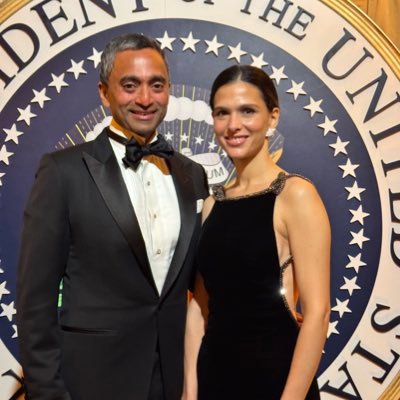
So I think it's just a matter of time until we start to cannibalize these extremely expensive, ossified large organizations that have relied on a very complicated go-to-market and sales and marketing motion. I don't think you need it anymore in a world of agents and auto GPTs. And I think that to me is quite interesting because A, it creates an obvious set of public company shorts.
Because it looks like that this anonymity has effectively been reverse engineered and there's no anonymity at all. And so what Bitcoin is quickly becoming is like the most singular honeypot of transactional information that's complete and available in public.
Jason, the best response is send him the thing that Sacks sent, which is the amount of available office space in San Francisco. People are voting companies. Companies are voting with their feet. So it's already, if the quality of life wasn't so poor, they'd stay.
Chamath's call off his viral tweet the week AutoGPT shipped: AI will not stay unregulated, and the real choice is between a brittle Section-230-style retrofit litigated by 80-year-old justices and a new FDA-style body staffed with subject-matter PhDs and multiple approval pathways that sandboxes a model, observes its behaviour against a counterfactual, and decides whether it may run in the wild. His enforcement mechanism is the compute layer — Amazon, Google and Microsoft, 'all the bare metal providers, all the people that provide GPUs', get forced by government to sandbox and gate what runs, with untrusted foreign IP ranges blocked. The tradeable read-through is a compliance moat: the licensed hyperscalers and compute owners become the gatekeepers of deployment and permissionless open-source model release loses. Sacks and Friedberg take the other side hard (political capture by big donors, deadweight loss, and capital plus talent simply relocating to one of 180 other countries); Jason wants industry self-regulation to pre-empt the heavy hand.
If the US does try to regulate or does try to put the brakes on the development of tools where the US can have a great economic benefit and a great economic interest, there will be advances made elsewhere without a doubt. Those markets and those places will benefit in an extraordinarily outpaced way.

What I'm saying is it's way too early. We don't even know what we're regulating. We don't know what the standard would be. And what we will do by racing to create a new FDA is destroying American innovation in the sector. And other countries will not slow down. They will beat us to the punch here.
Episode digest
written during extraction and stored in data/extractions/ep124.json — the auditable source of truth, including everything market-adjacent that did not earn a capture
AutoGPT (out two weeks) turned this into the agentic-AI episode, and the one new idea is Chamath's: an FDA-style approval body for AI models enforced at the compute layer -- Amazon, Google and Microsoft forced to sandbox and gate what runs on their GPUs -- coined as ai-fda-licensing-regime-2023 off his 1.2M-view tweet, and born fully contested (Sacks: political capture and destroyed American innovation; Friedberg: capital and talent relocate to one of 180 other countries; Jason: self-regulate first). Chamath also reinforced his own models-as-a-service-replaces-saas call at maximum strength -- agents cannibalizing 'ossified' go-to-market-heavy enterprise software, 'an obvious set of public company shorts' -- with Friedberg going further (you may not need software companies at all) and Sacks the lone opposer (years away, humans stay in the loop, 'mostly a force for good'). He then loudly brushed off the 40-minute generative-media segment as 'stupid bullshit' about 'children's books and fat pictures of sacks' while Friedberg, Jason and Sacks all reinforced it, so his bearish-software thesis and Friedberg's bullish-creative-production thesis now sit in open conflict. Smaller captures: Chamath calling Bitcoin's pseudonymity reverse-engineered and the chain 'the most singular honeypot' with Sacks taking the other side (on-chain forensics legitimized BTC), plus his media-waning-relevance and SF-office-vacancy beats. Diarization is CLEAN -- counts, addressed-by-name and fingerprint tests all pass; SPEAKER_5 (2 turns, 1:16:39) is a played news clip cued by Sacks' 'play the video' and nothing was attributed to it, and the turn labelled Chamath at 58:30 opens with a one-clause bleed of Sacks' hand-off ('Chamath, I think you're mixing a bunch of things together') that was not quoted from. The Bob Lee walk-back (the suspect turned out to be an acquaintance) was deliberately NOT captured -- Friedberg's self-criticism is real but states no market channel; only Chamath's office-vacancy line does.